Insights

Ideas for better decisions.
Research, writing and practical intelligence for an age of AI-assisted decision-making.

DCRADO Insights brings together research, writing, books, podcasts and practical thinking on Decision Architecture, Responsible AI, governance, financial markets and human accountability.

The objective is not to produce more information. It is to make consequential thinking more structured, challengeable and useful.

Decision Architecture · Responsible AI · Governance · Judgment · Accountability

Explore the Knowledge System

Different paths.
One connected body of thinking.

DCRADO knowledge can be explored by format, by concept or by the decision environment in which it is applied.

Articles, research, books, podcasts, tools and real-world applications are connected through a common architecture — helping move from information to understanding, and from understanding to responsible action.

By Format

Choose how you want to engage.

Selected Articles

Research

Books

Podcasts

Videos

Tools & Templates

By Concept

Explore the ideas behind DCRADO.

Decision Architecture

Structured Intelligence

The D.C.R.A.D.O.™ Principle

Structure-in-the-Loop™

Decision Ownership

Oversight & Auditability

By Decision Environment

Start with the decision to be made.

Strategy & Capital Allocation

Risk, Compliance & Financial Crime

AI Governance & Technology Decisions

Corporate & Operational Decisions

Professional Judgment & Advisory

Public & High-Stakes Decisions

Knowledge becomes more useful when ideas, evidence and applications remain connected.

A DCRADO insight can connect to a core concept, a real decision environment, a stage of the D.C.R.A.D.O.™ framework and, eventually, the practical tool that helps put that thinking into action.

Featured Insight

One question at the centre of DCRADO.
What makes intelligence useful for a decision?

AI can expand access to information, analysis and prediction. Competitive advantage emerges when that intelligence is placed inside a structure that supports judgment, challenge and responsibility.

This featured article captures one of the ideas that later became central to DCRADO: better AI does not remove the need for better decision architecture.

Article · FXStreet

Foundational Thinking

AI is not your edge — Your decision architecture is

Why advantage in an AI-enabled environment depends less on access to artificial intelligence and more on how evidence, context, analysis, human judgment and accountability are structured around the decision.

Primary Concept

Decision Architecture

Decision Environment

Strategy & Capital Allocation

Sector

Investment & Asset Management

DCRADO Stage

Analyze · Decide

Read the original article

An insight becomes more useful when it can be connected to a concept, a decision environment, a DCRADO stage and eventually the tool that helps put the thinking into practice.

Selected Articles

Thinking about decisions.
Testing that thinking against the real world.

DCRADO brings together two complementary forms of writing: foundational thinking about decision architecture and applied analysis of the environments in which decisions must actually be made.

The purpose is not to force every market or economic article into the DCRADO framework. It is to distinguish clearly between ideas that define the architecture and real-world developments that allow those ideas to be examined in practice.

Markets provide the context. Decision Architecture asks what should be done with what we think we know.

Future Applied Decision Intelligence articles will increasingly connect current economic and market developments with evidence, uncertainty, competing interpretations, human judgment and the conditions that should trigger reassessment.

Research & Frameworks

Deeper investigation.
Structured ideas designed to move into practice.

DCRADO research examines how artificial intelligence, evidence, judgment, governance and accountability interact when decisions carry material consequences.

Frameworks translate that research into reusable structures — creating a common architecture that can adapt across finance, regulation, organizations and other high-consequence decision environments.

Selected Research

Research that tests how responsible intelligence can work in the real world.

Research Paper

Responsible AI Governance Roadmap in Investment Firms

From Zero AI to Scalable, Regulated, Real-World Adoption

A structured roadmap for moving from early AI experimentation toward governed, scalable and accountable adoption inside investment firms.
Research Direction

Responsible Intelligence in Consequential Decisions

Ongoing work examining how AI-supported intelligence should be validated, challenged and governed before it acquires influence over consequential decisions.

Methodological Research

From AI Output to Accountable Decision

Research into the structures required to preserve evidence, uncertainty, human judgment, decision authority and ownership when artificial intelligence contributes to analysis.

Core Frameworks

Structures for making intelligence usable, challengeable and accountable.

Core Framework

The D.C.R.A.D.O.™ Principle

Define · Contextualize · Retrieve · Analyze · Decide · Oversee

A six-stage architecture for moving from an initial decision question to evidence, analysis, judgment, ownership and continuing oversight.

Explore the Framework

Governance Concept

Structure-in-the-Loop™

Moving beyond nominal human presence toward visible structures for challenge, judgment, authority, accountability and responsibility.

Explore Decision Architecture

Applied Architecture

AI Decision Architecture in Finance

Applying DCRADO principles to financial decisions where evidence, models, professional judgment, regulatory obligations and human accountability must remain connected.

Research develops the questions. Frameworks give those questions a structure that can be used.

As the DCRADO Knowledge System develops, research papers, working papers, methodological notes and applied frameworks will become connected to concepts, decision environments and practical tools.

Books & Published Works

Long-form thinking.
One connected decision philosophy.

DCRADO is supported by a growing body of published work exploring Decision Architecture, Responsible AI, financial markets, governance, regulation, compliance and human accountability.

These books extend the ideas behind DCRADO into long-form frameworks, professional applications and narrative exploration. They are published and available through Amazon and selected booksellers and distributors.

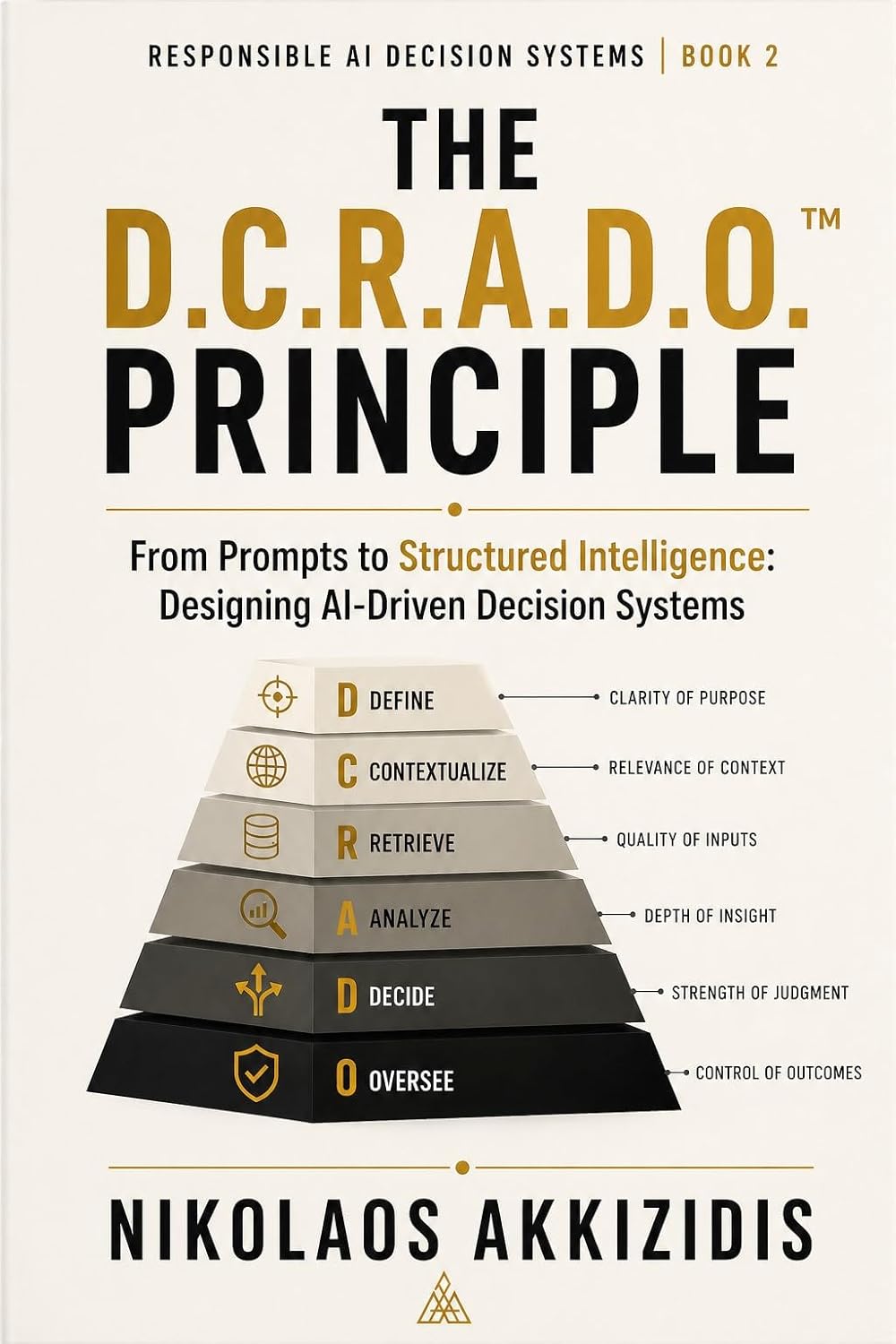
The D.C.R.A.D.O.™ Principle

Core Framework

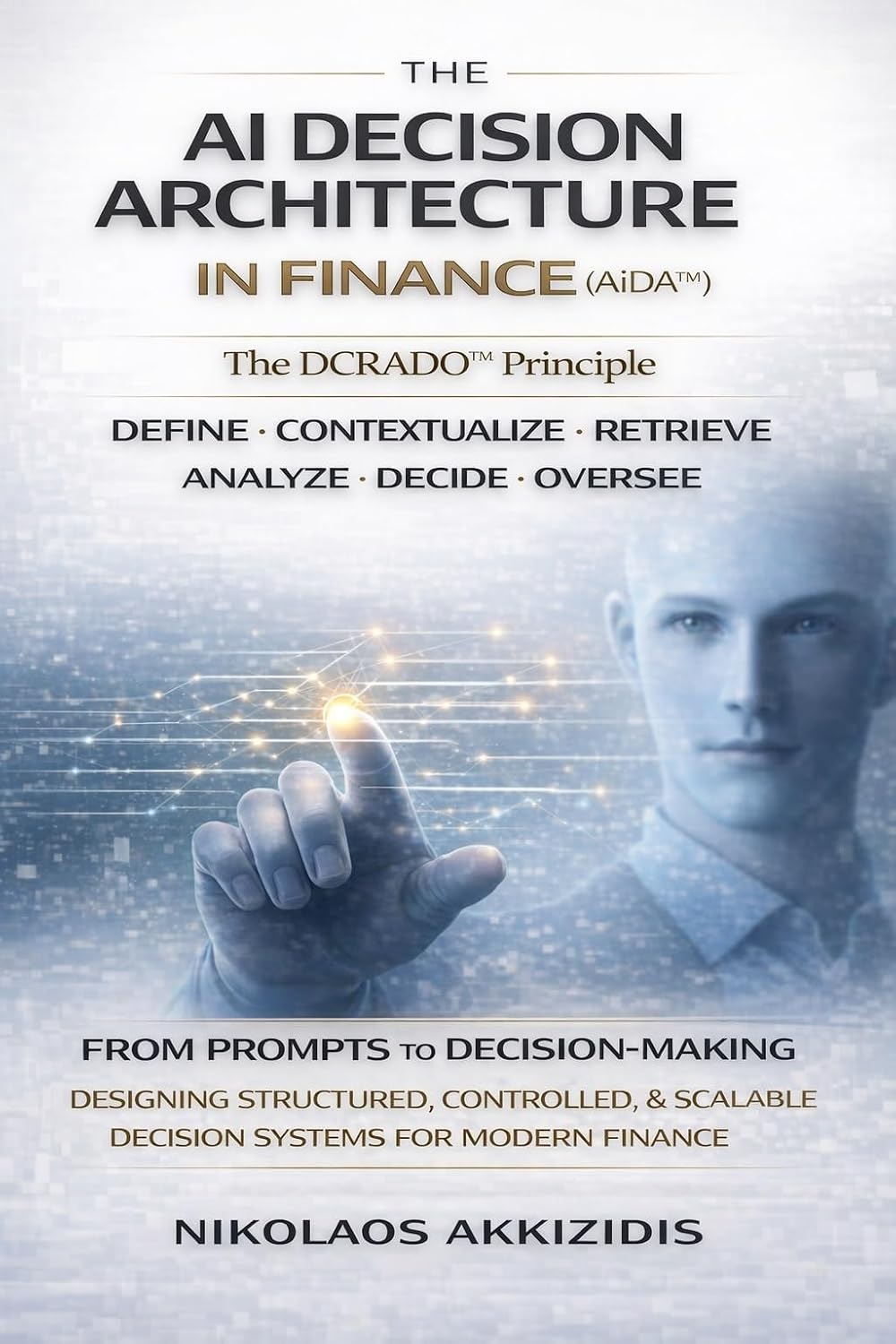
The D.C.R.A.D.O.™ Principle

Decision Architecture · Structured Intelligence

From prompts to structured intelligence and disciplined AI-driven decision systems.

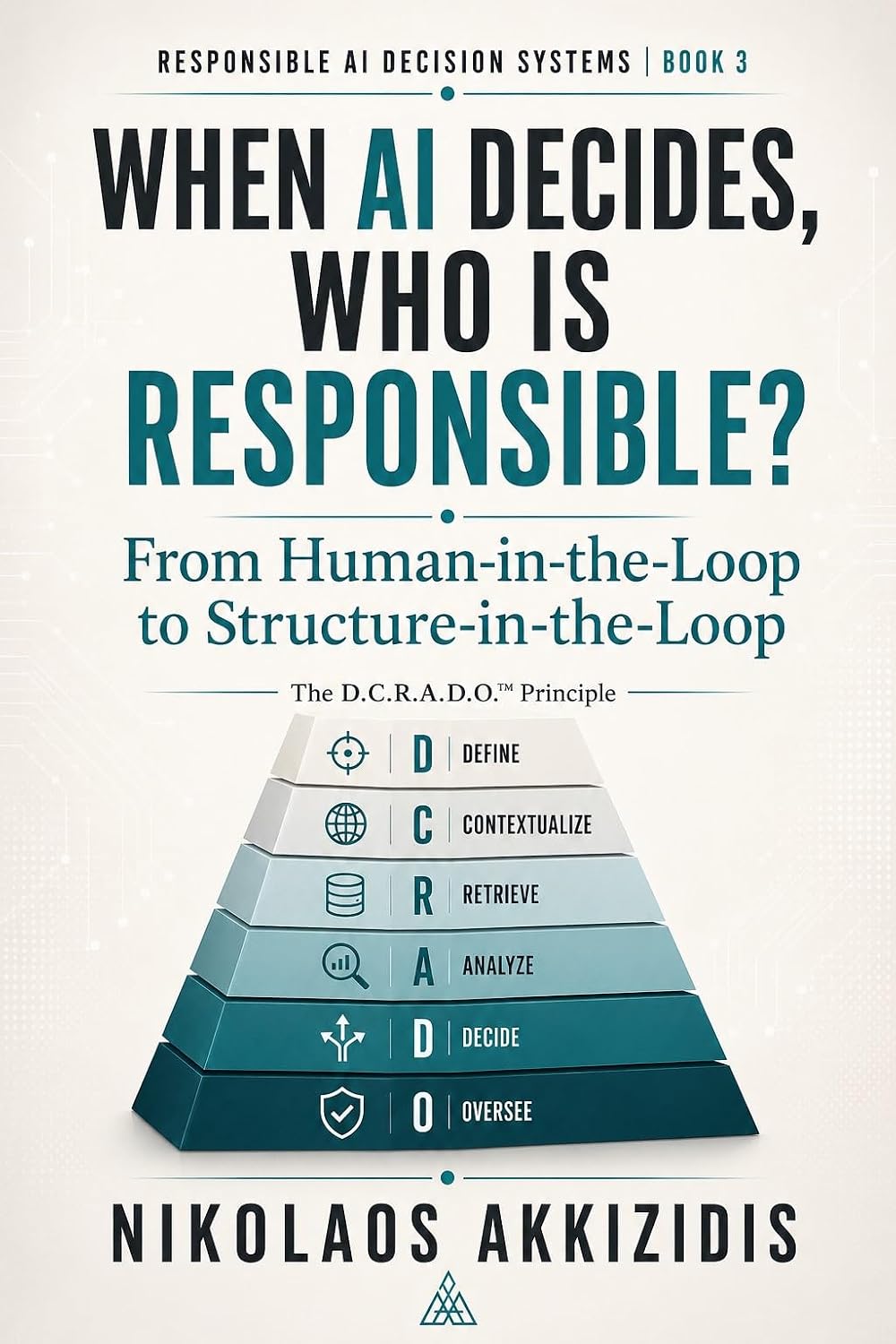
When AI Decides, Who Is Responsible?

Responsibility & Governance

When AI Decides, Who Is Responsible?

Human Oversight · Decision Ownership

From Human-in-the-Loop to Structure-in-the-Loop™ and visible decision ownership.

The AI Decision Architecture in Finance

Financial Decision Architecture

The AI Decision Architecture in Finance

Finance · Structured Decision-Making

Applying the DCRADO principle to structured, controlled and scalable financial decisions.

Artificial Intelligence Has No Conscience — And That Matters

Responsible AI

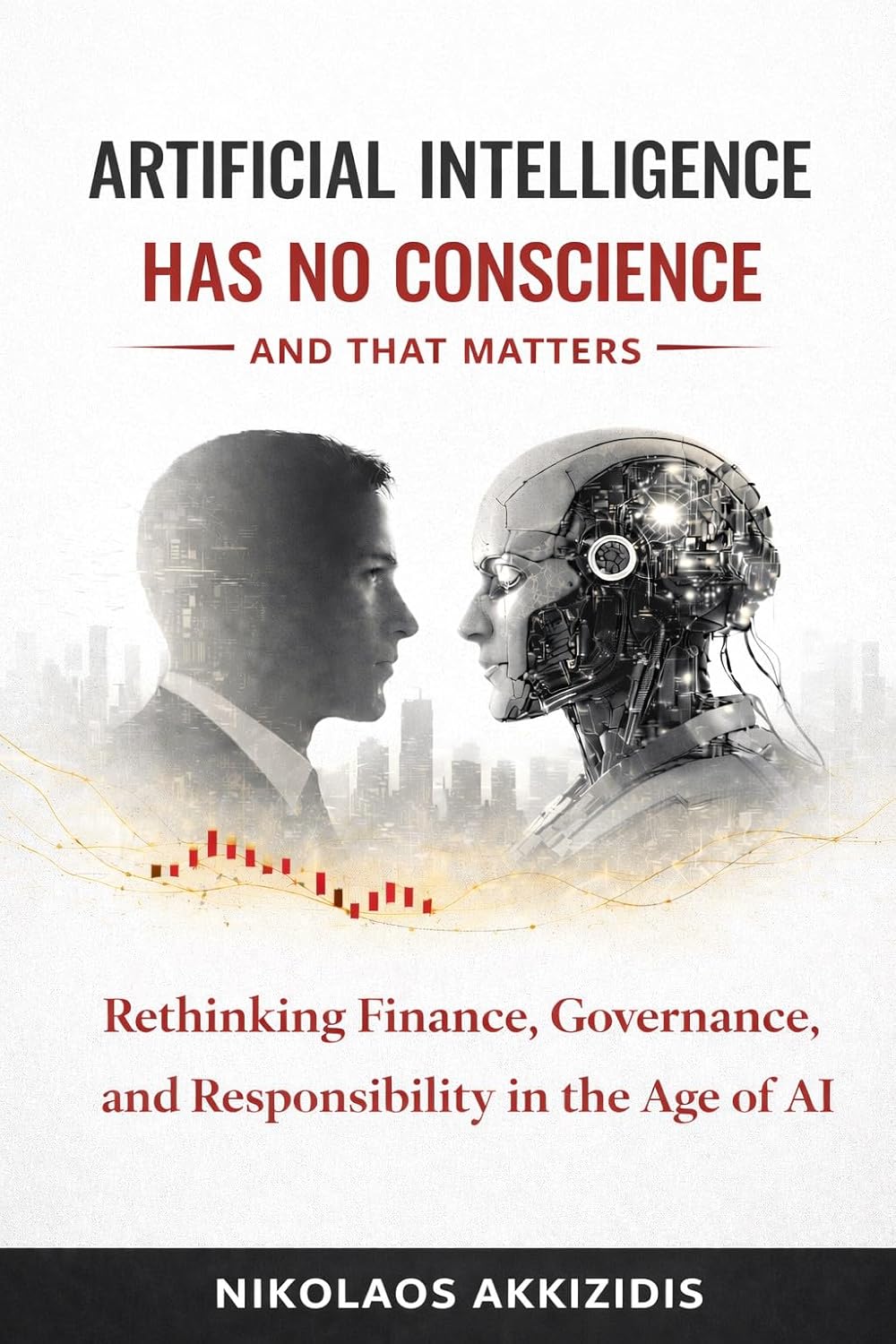
Artificial Intelligence Has No Conscience — And That Matters

Human Judgment · Accountability

Rethinking finance, governance and responsibility in the age of artificial intelligence.

Applying the EU AI Act in Financial Institutions

AI Regulation

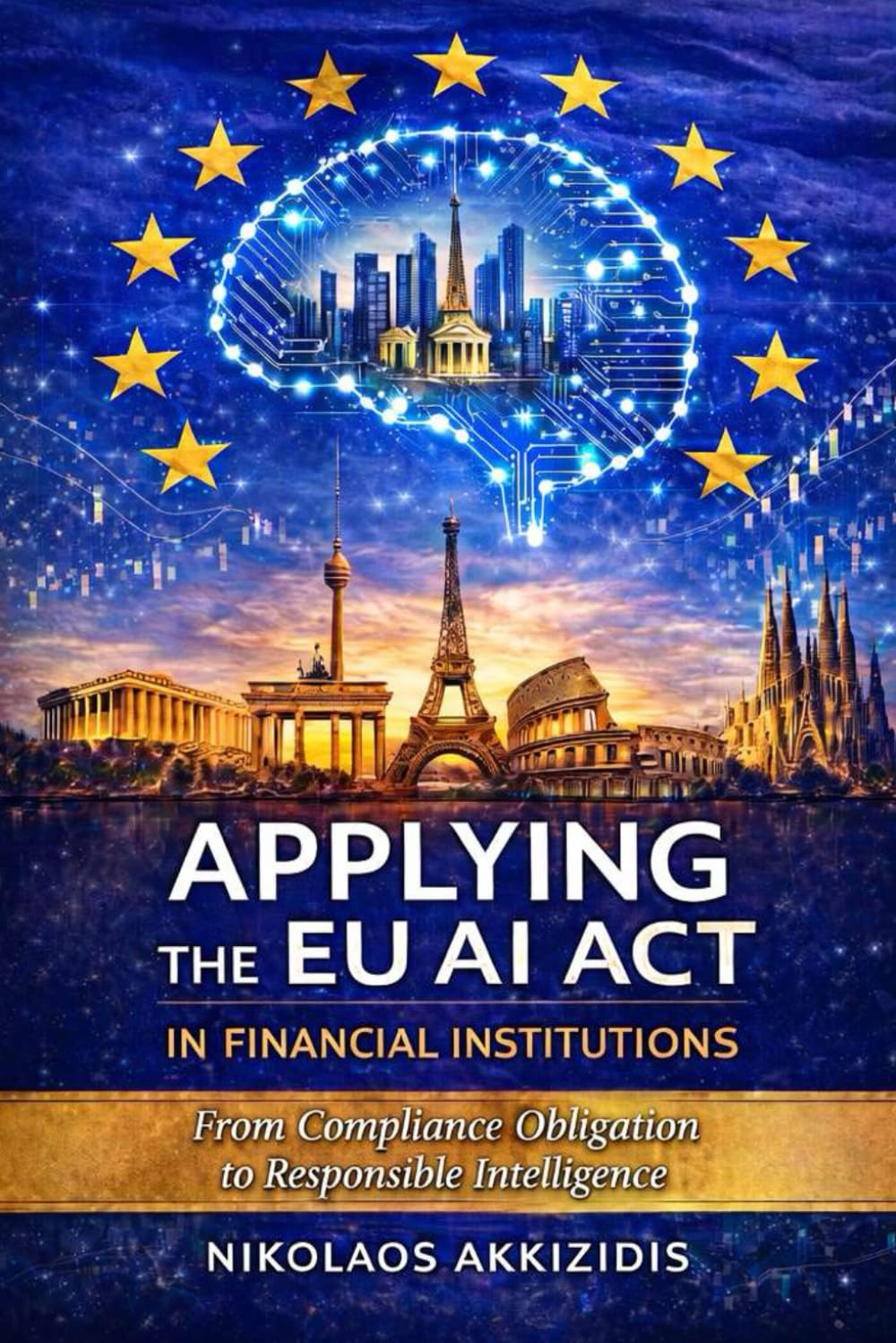
Applying the EU AI Act in Financial Institutions

Responsible AI · Governance · Regulation

Moving from regulatory compliance obligations toward responsible intelligence.

Why and How to Create Effective AI Prompts for Regulatory Compliance

Regulatory Compliance

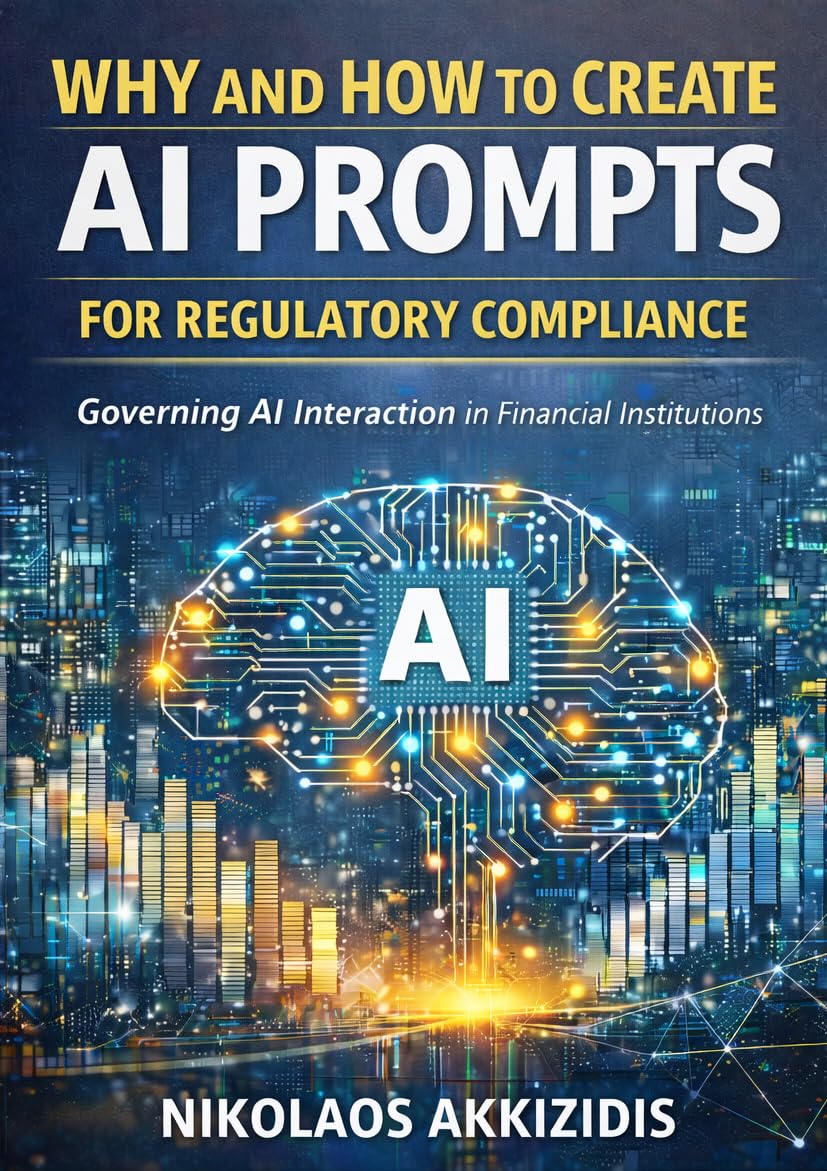
Why and How to Create Effective AI Prompts for Regulatory Compliance

AI Interaction · Controls · Compliance

Governing AI interaction and prompt design within financial institutions.

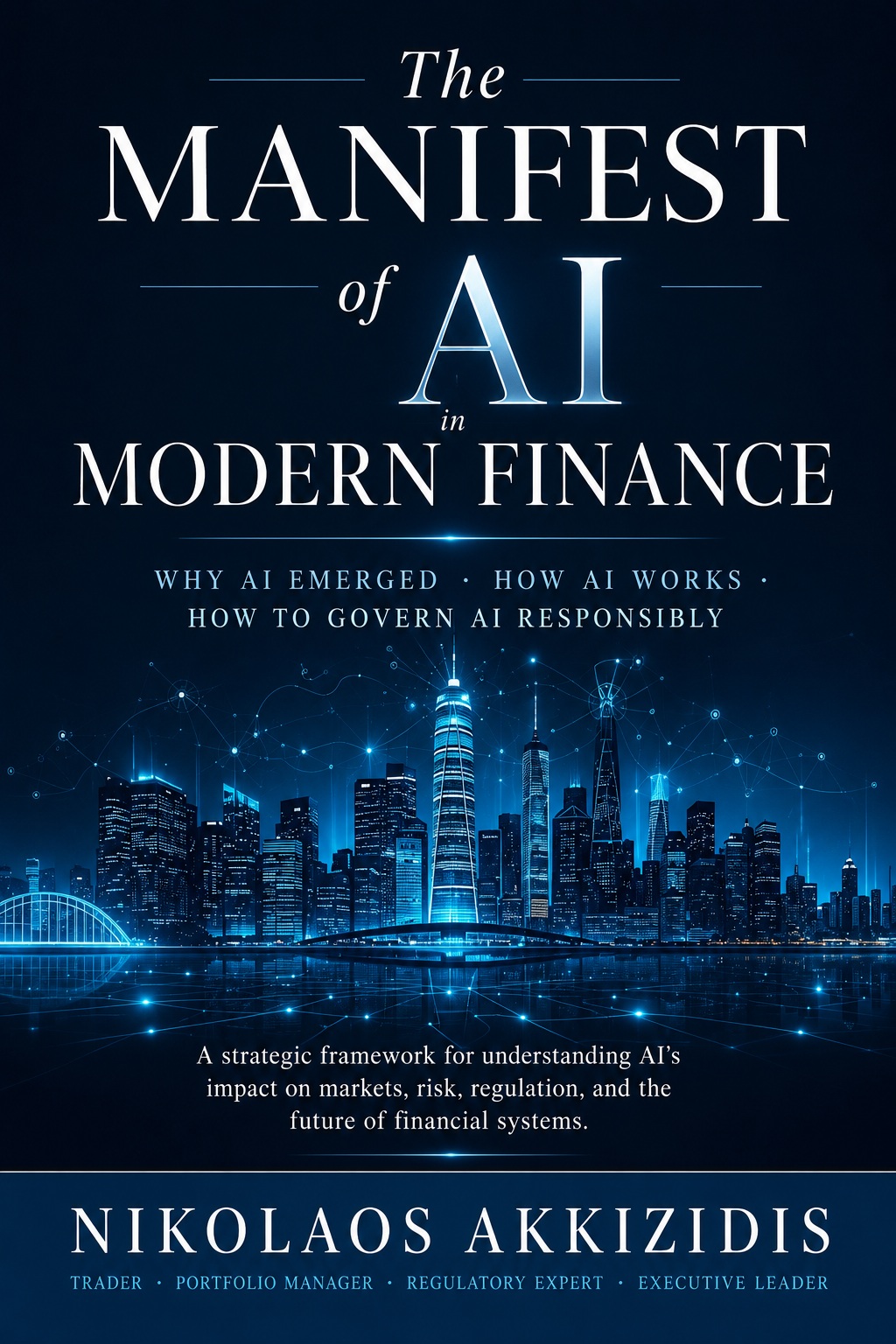
The Manifest of AI in Modern Finance

Finance & Strategy

The Manifest of AI in Modern Finance

Markets · Risk · Governance

Understanding AI’s impact on markets, risk, regulation and the future of financial systems.

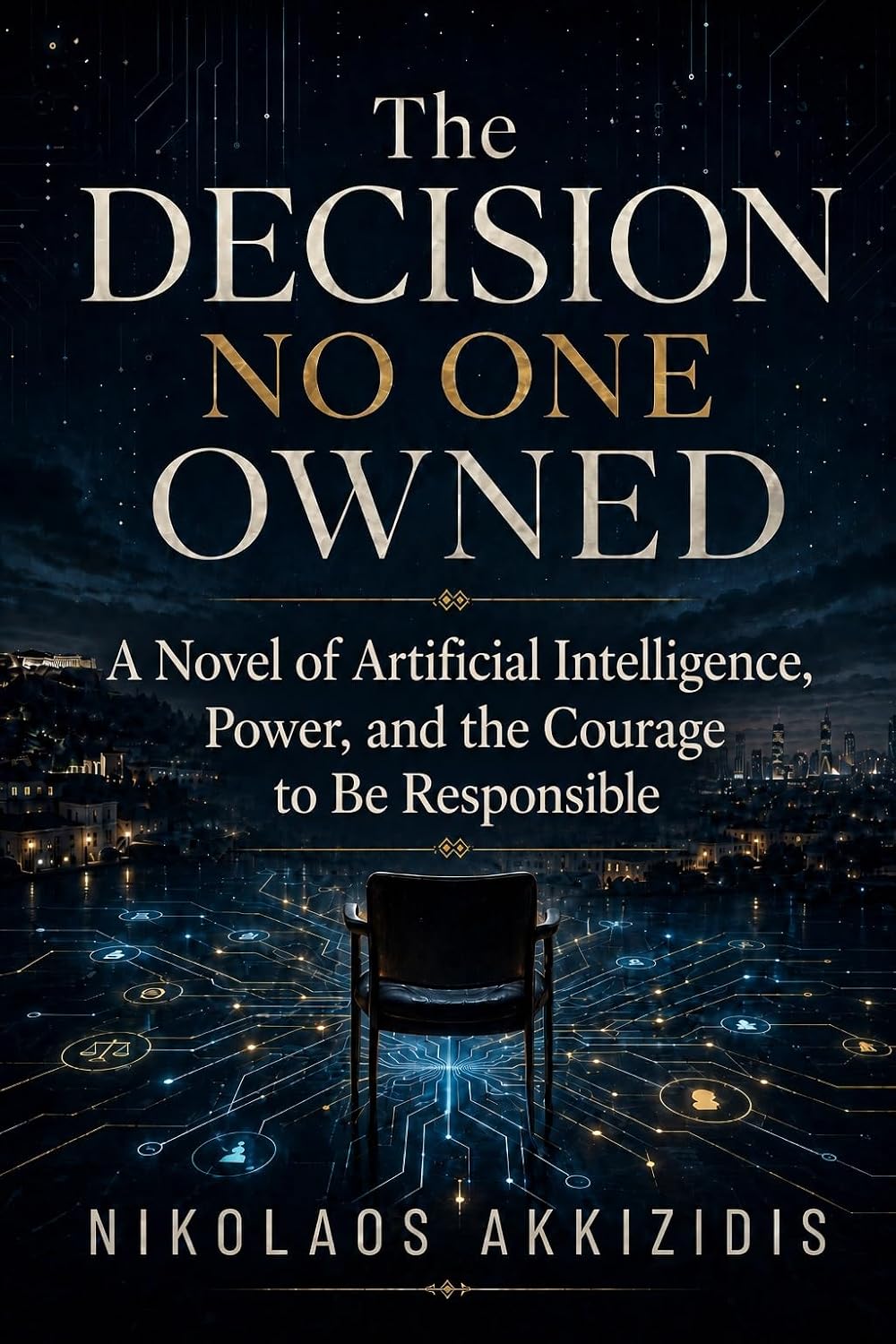
The Decision No One Owned

Narrative Responsibility

The Decision No One Owned

AI · Power · Human Accountability

A novel of artificial intelligence, power and the courage to be responsible.

Broader Published Works

The wider bibliography also extends into business, compliance, crypto-asset regulation, Cyprus business and residence, financial economics, strategic risk and investment management.

View all published books

Amazon Author catalogue and additional international booksellers.

Podcast & Conversations

Ideas in conversation.
Responsibility in practice.

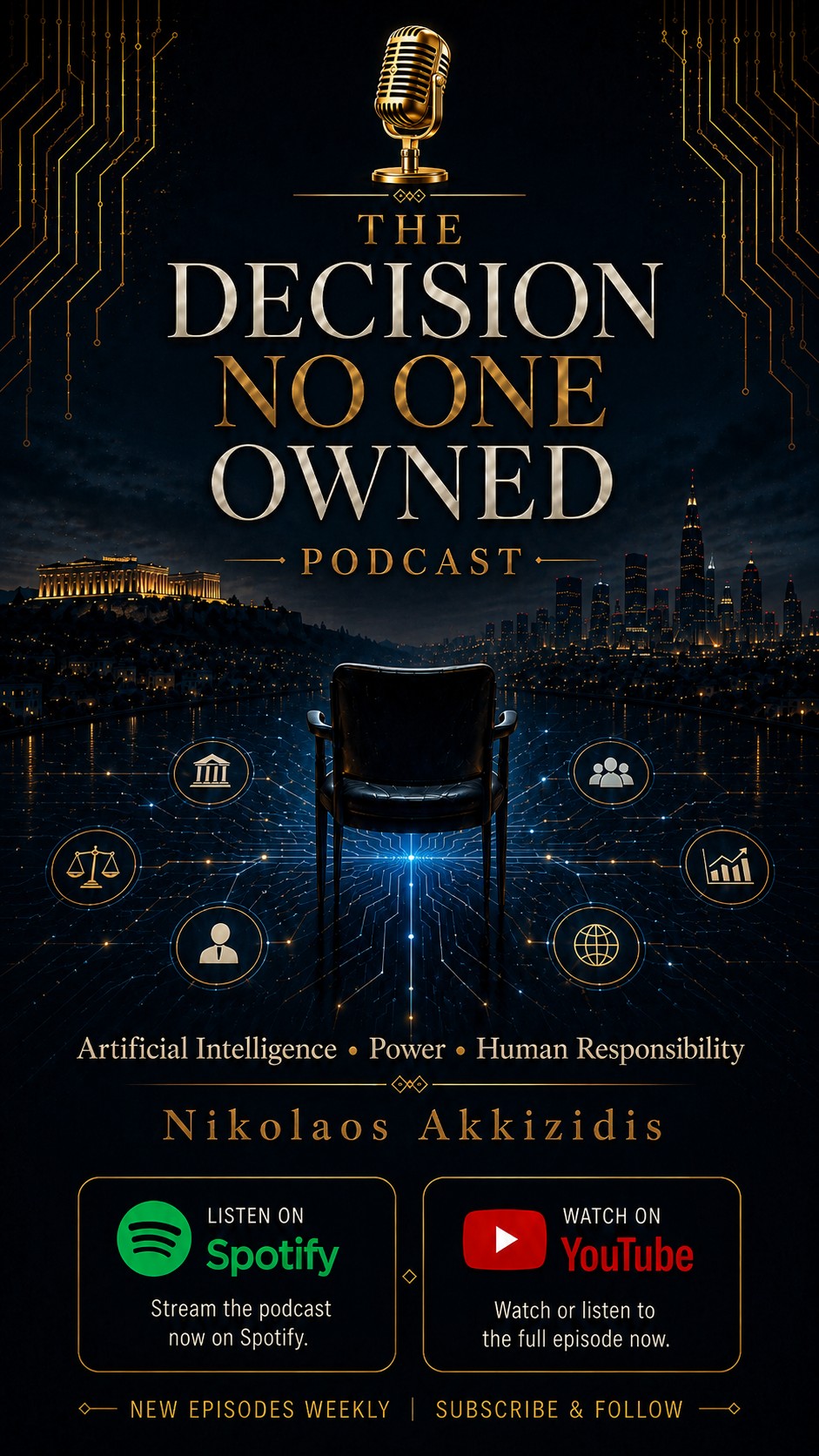
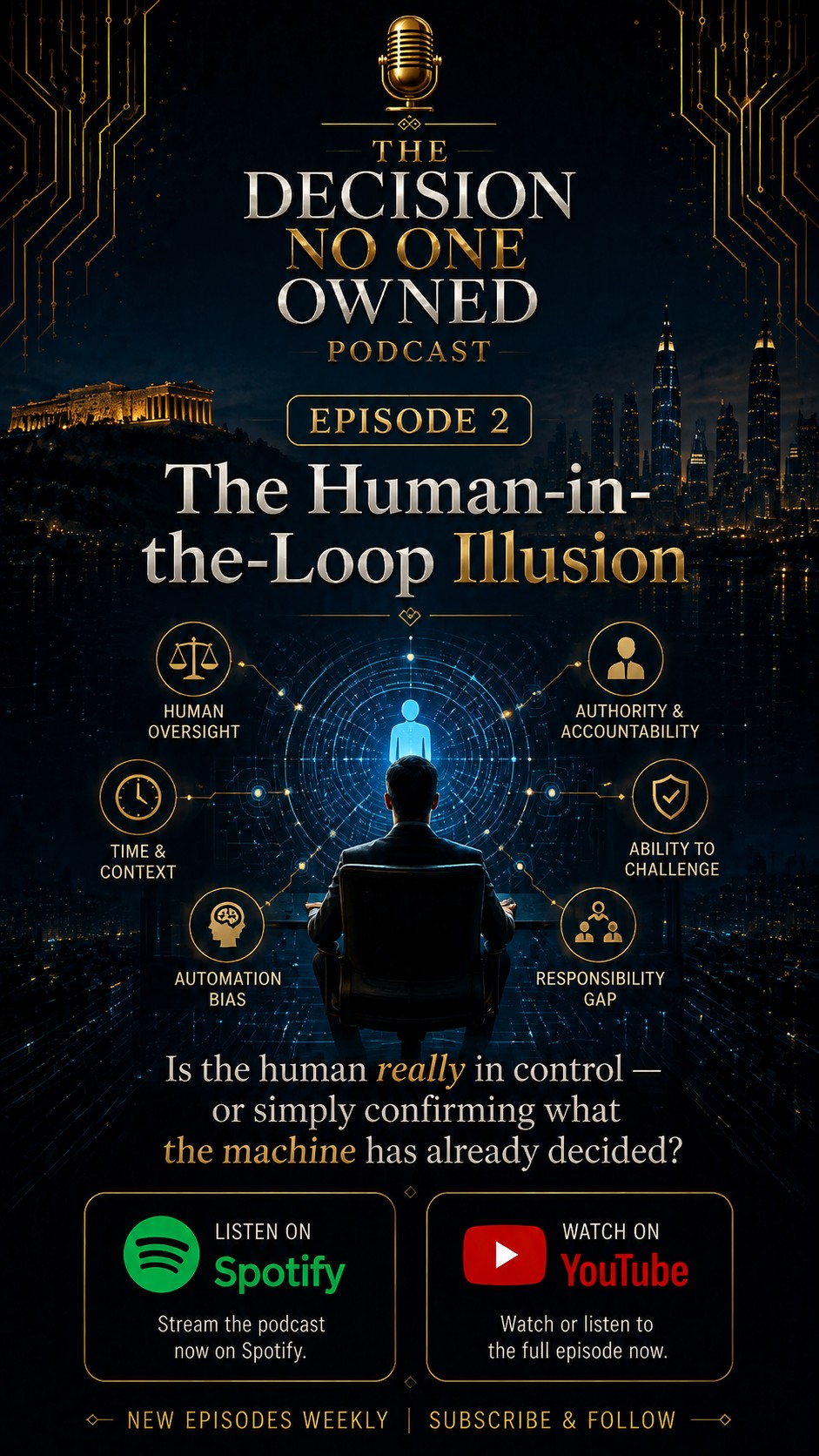
The Decision No One Owned Podcast explores what happens when artificial intelligence influences consequential decisions without inheriting responsibility for their outcomes.

Each episode examines judgment, authority, accountability and the structures required to keep human responsibility visible in AI-assisted decision-making.

The Decision No One Owned

Podcast Series

The Decision No One Owned

Decision Architecture · Human Accountability

A continuing exploration of artificial intelligence, power, judgment and the question that cannot be delegated: who owns the decision?

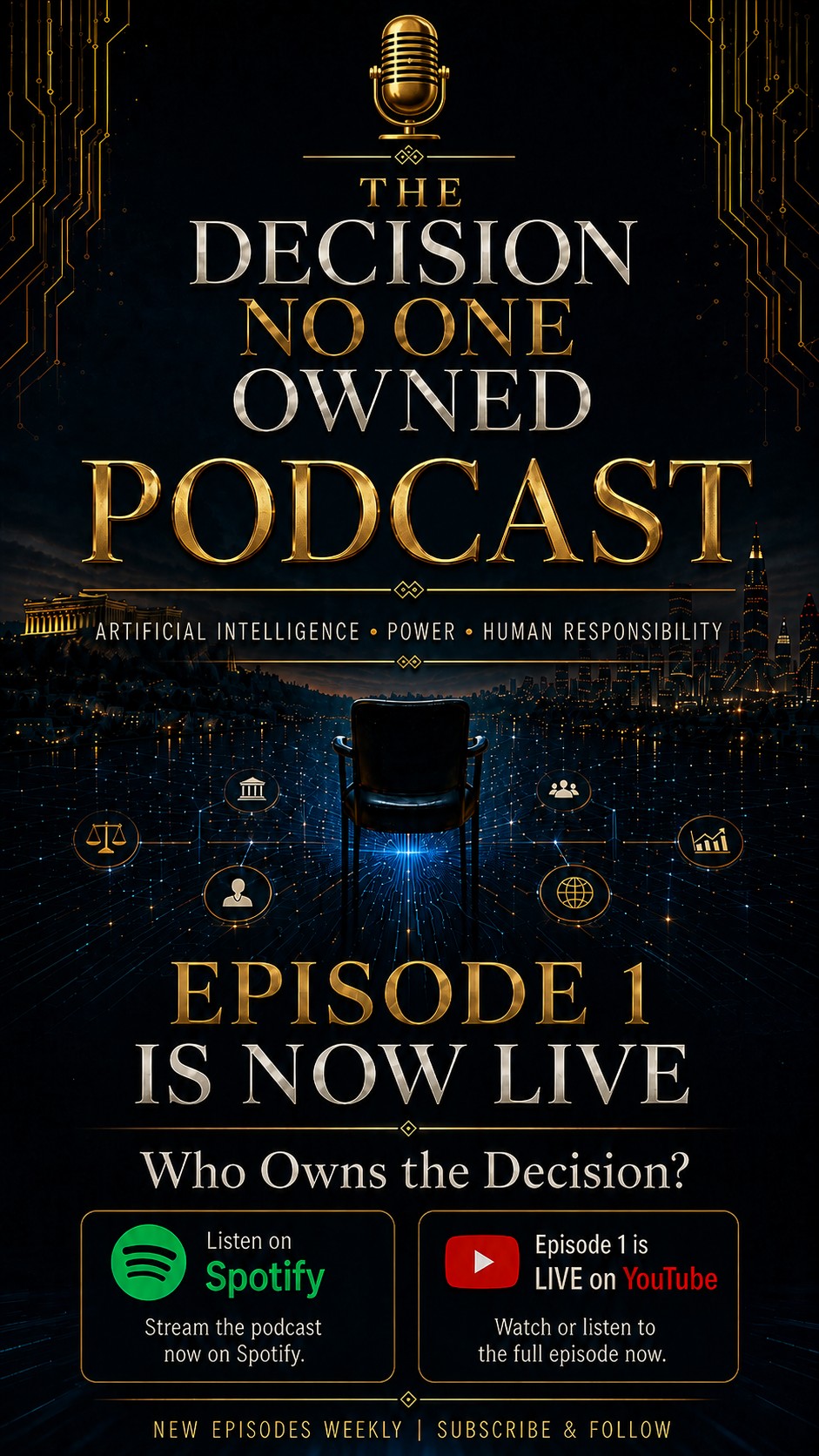
Who Owns the Decision?

Episode 01

Who Owns the Decision?

Decision Ownership

When artificial intelligence influences an outcome, where does responsibility actually sit?

The Human-in-the-Loop Illusion

Episode 02

The Human-in-the-Loop Illusion

Structure-in-the-Loop™

Why nominal human oversight may become little more than final approval of an AI-shaped decision.

AI may contribute to the decision. Responsibility for the outcome still requires a human owner.

The podcast extends DCRADO beyond written frameworks by testing its central ideas through questions, examples and conversations about real-world decision responsibility.

Videos & Talks

Ideas made public.
Decision Architecture in conversation.

DCRADO extends beyond written research into talks, presentations, interviews and recorded conversations about artificial intelligence, decision-making, governance and human responsibility.

These formats make the ideas easier to examine in public — through explanation, challenge, discussion and their application to consequential decisions.

01 · Talks & Keynotes

Decision Architecture on the stage.

Keynotes, conference contributions and panel discussions exploring Responsible AI, financial decision-making, governance, risk and accountable human judgment.

Explore Speaking & Engagements

02 · Interviews & Conversations

Ideas tested through dialogue.

Conversations create space to examine assumptions, competing interpretations and the questions that emerge when AI begins to influence consequential decisions.

Explore on YouTube

03 · Video Essays

Complex ideas, explained visually.

A developing collection of short-form and long-form visual explanations will explore DCRADO concepts, decision failures, responsible AI and practical decision architecture.

Video Archive · Developing

Public conversation matters because consequential ideas should be capable of being explained, questioned and challenged.

As the DCRADO Knowledge System develops, individual talks, interviews and videos will become connected to the research, concepts, books and decision environments they explore.

From Knowledge to Decision

Knowledge is useful.
Structure turns it into action.

DCRADO does not stop at insight. The next step is to structure what is known, what remains uncertain, who has authority to decide and how the decision will be challenged, documented and overseen.

Frameworks, tools and the developing DCRADO Decision Pack translate the principles of Decision Architecture into practical structures for consequential decisions.

01 · Framework

Start with the decision architecture.

Use the D.C.R.A.D.O.™ framework to move from purpose and context to evidence, analysis, decision and oversight.

Explore the Framework

02 · Tools & Templates

Put structured thinking into practice.

Practical tools help define the decision, organize evidence, expose assumptions, record challenge and make responsibility visible.

Explore Tools & Templates

03 · Decision Pack

Bring the decision together.

The DCRADO Decision Pack is being designed to connect context, evidence, competing interpretations, judgment, decision ownership and oversight within one coherent decision record.

Decision Pack · Developing

The objective is not simply to produce a better answer. It is to create a decision that can be understood, challenged, governed and owned.

Insights provide the knowledge layer. Decision Architecture provides the structure. Tools and the Decision Pack provide the bridge into action.

DCRADO

Do not start with the prompt.
Start with the decision.

Artificial intelligence can generate answers. Decision Architecture defines the purpose, context, evidence, judgment, responsibility and oversight around what happens next.

DCRADO is designed around that distinction — moving from information and intelligence toward decisions that can be understood, challenged, governed and owned.